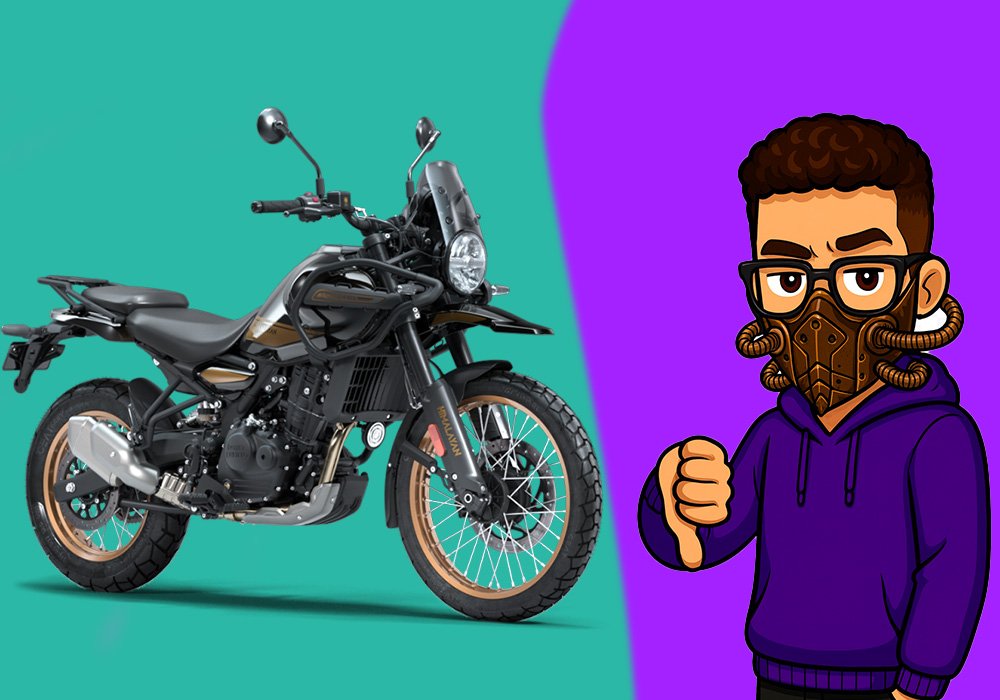

Royal Enfield Himalayan 450: 10 Problems Owners Are Reporting
Important notice before you read. Everything below is collected from owner forums, published reviews, and Royal Enfield’s own statements found online. None of this reflects my personal opinion or my own experience with the bike. Many of these problems are exceptions, not the rule. Plenty of Himalayan 450s are running just fine. But if you’re shopping for one, you deserve to know what some owners are saying before you sign anything.
TL;DR
- Most reported issues are cosmetic or electronic (switches, paint, dash glitches): annoying but fixable under warranty.
- A handful relate to engine behaviour in heat or heavy traffic (low-RPM stalling, fuel pump priming).
- The most serious one, chassis frame breakage, has so far only been documented on bikes fitted with non-OEM crash guards. Royal Enfield has issued an official statement on it.
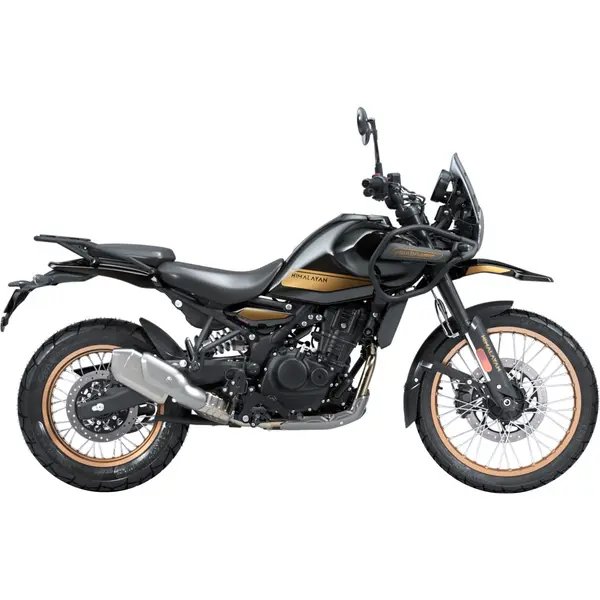
The new liquid-cooled Royal Enfield Himalayan 450 is the brand’s biggest engineering leap in years. It runs the all-new 452 cc Sherpa engine: DOHC, four valves, around 40 hp at 8,000 rpm, 196 kg kerb weight, 825 mm adjustable seat. On paper it’s a serious adventure tourer at a sub-650 cc price.
But spend an hour on Team-BHP, ADVrider, RoyalEnfieldOwners.com or the Classic Motorworks forum and a more textured story emerges. Below are 10 issues riders are reporting, ordered from cosmetic to safety-critical. Each section has its sources listed right below it.
Source: Royal Enfield - Official Himalayan 450 Technical Specifications PDF
Two things worth bookmarking before you read on:
- Check the Himalayan 450 on the Goutchen seat-height simulator: see whether you’ll flat-foot it before you even visit a dealer.
- Full Himalayan 450 spec sheet on Goutchen: all the numbers in one place.
1. Switch and button quality
Several owners say the new joystick-style switchgear feels cheap, sticks, or stops registering presses. Reports cover the horn button, hazard switch, and the Tripper Dash navigation joystick. Frustration ran high enough that one owner started an iPetitions page calling for a switch recall, and the issue keeps surfacing on the Royal Enfield Owners dash-controls thread.
Severity: low. Annoying, not dangerous, and replaceable under warranty.
Sources: iPetitions - Recall Himalayan 450 Switches · RoyalEnfieldOwners - Dash controls thread
2. Paint and finish on early units
This one is mostly a launch-period concern. Early-batch bikes drew complaints about thin engine paint, rust on spokes, and uneven panel fit, with similar threads across Team-BHP ownership reviews. Reviewers note that European-spec units, which arrived later in the production schedule, are visibly better finished than the earliest Indian-market bikes. If you’re shopping secondhand, check exhaust headers and tank seams under good light.
Severity: low. Cosmetic, but it hurts resale value.
Sources: Motorbeam - Himalayan quality issues · Team-BHP - Himalayan 450 ownership review
3. Service centre knowledge gap
A brand-new engine platform means brand-new dealer training, and the rollout has been uneven. One owner review on BikeDekho describes the service centre being unfamiliar with the Sherpa 450 engine and taking several days to diagnose minor faults. RoyalEnfieldOwners threads from early 2024 echo this in markets where the bike had just launched.
Severity: low to moderate. Worse in regions where the 450 is brand-new, better in mature markets.
Source: BikeDekho - Owner review on RE service centre experience
4. Tripper Dash and TFT navigation glitches
The 4-inch round colour TFT and its companion Royal Enfield app launched rough. At first, Google Maps mirroring and on-screen music controls worked only intermittently. Royal Enfield pushed a FOTA (firmware-over-the-air) update on 21 February 2024 with five patches that fixed most of it. Even after that, owners still report Wi-Fi and Bluetooth dropouts, navigation freezing when paired to Bluetooth headphones, and the occasional dash reboot.
Severity: low to moderate. Software, not hardware. Keep installing updates.
Sources: Rushlane - Tripper Dash post-FOTA review · UKGSer - Connecting a phone to the 450’s instrument screen
5. Over-sensitive side-stand sensor
A common complaint from off-road riders: the side-stand kill switch triggers when the stand is barely raised, killing the engine mid-trail. Several owner videos walk through DIY removal of the switch, and threads on the Royal Enfield Owners forum suggest Royal Enfield has addressed this in a more recent firmware update. Pre-update bikes may still need a workshop visit.
Severity: moderate. Annoying on tarmac, genuinely risky if you stall mid-river crossing or on a hill.
Source: RoyalEnfieldOwners - Side stand indicator and starter motor thread
6. The weight and seat-height combo
196 kg kerb is heavy for a 450 single. Seat height is 825 mm standard, 845 mm in the raised position, or 805 mm with the optional low-seat accessory. The Adventure Motorcycling Handbook 3,000 km review calls it “weighty to push around”: fine once you’re rolling, less fun in a parking lot or on a steep gravel hill. Riders under 5′7″ routinely flag the seat as the deal-breaker.
👉 Try the Himalayan 450 on the Goutchen seat-height simulator before you commit.
Severity: moderate. Not a defect. A fit decision.
Sources: Royal Enfield USA - Himalayan 450 spec page · Adventure Motorcycling Handbook - 3,000 km review
7. Gearbox quirks: false neutrals and shift feel
Owners on Team-BHP and the wider Royal Enfield Owners forum describe occasional false neutrals between fifth and sixth, notchy upshifts in the first 1,000 km, and a clutch that often needs adjustment from new. Most threads end with “improved after running in”: but a few owners had to ask the dealer to re-adjust the clutch cable to fully sort it.
Severity: moderate. Usually resolves with break-in and a free dealer adjustment.
Sources: Team-BHP - Himalayan 450 review thread · RoyalEnfieldOwners forum
8. Fuel-pump priming and cold-start hiccups
Multiple reports describe the amber engine warning light flickering at ignition while the fuel pump fails to prime, forcing the rider to cycle the key once or twice before the bike will fire. The RoyalEnfieldOwners pump-priming thread traces the cause to excess anti-corrosion grease on the fuel-pump relay terminals and the ECU earth connector: cleaning the contacts usually solves it. A handful of owners ended up replacing the relay outright.
Severity: moderate to high. Won’t strand you on the road, but it gets old fast.
Source: RoyalEnfieldOwners - No power to pump issue thread
9. Stalling at low RPM in hot weather
The one that’s drawn the most international press. Carblogindia covered an international reviewer documenting the bike stalling whenever revs dropped below ~3,000 rpm during testing, especially in heavy traffic and direct sun. The recurring diagnosis on owner forums points to the EVAP (evaporative emissions) system: a clogged purge valve, a crimped hose, or a saturated charcoal canister, building pressure inside the tank. The community workaround is to crack the fuel cap to vent pressure; a proper fix needs the dealer to inspect the EVAP plumbing.
Severity: high. Stalling at a junction or roundabout in traffic is genuinely dangerous.
Source: Carblogindia - Foreign reviewer reports stalling issues on Himalayan 450
10. Chassis frame breakage with aftermarket crash guards
The most alarming reports first surfaced on Team-BHP in 2024: two separate cases of the main frame snapping near the engine-mount area. On the new Himalayan, the engine is a stressed member of the chassis. It’s bolted to the tubular steel frame at three points (two upper, one lower) at specific torque values, with a spacer that’s critical to load distribution.
Royal Enfield’s official statement, reported by ZigWheels and Autocar India, found that both failed bikes had aftermarket crash guards fitted with non-spec bolts at incorrect torque, creating long-term chassis stress that eventually caused the frame to fail. Simulation tests run by the company confirmed the mechanism. The owner’s manual states that any modification to the chassis, including fitting non-OEM guards, voids the warranty.
If you’re already running aftermarket protection, or you’re considering a used 450 with bolt-on bars, have a dealer check the engine-mount bolts against the Royal Enfield service spec. And if you haven’t bought a crash guard yet, the company’s GMA-catalogue guards are the safe choice.
Severity: critical. Read the used motorcycle inspection checklist before buying a secondhand one with non-OEM extras.
Sources: Team-BHP - Himalayan 450 chassis failure analysis · ZigWheels - Royal Enfield official statement on chassis breakage · Autocar India - Chassis failure explained
So, should you still buy a Himalayan 450?
Most of these issues fall into three buckets: launch-period cosmetic problems that have largely improved on later batches, software bugs that have been patched (and will keep getting patched), and ergonomic realities like weight and seat height that are a choice-of-bike question rather than a defect. Two issues are worth taking seriously: low-RPM stalling and the chassis-breakage story. The chassis one in particular is a clean reminder that adventure-bike accessories are not “fit and forget” parts.
For the money, the Himalayan 450 is still one of the most capable mid-displacement adventure bikes you can buy. Just go in with your eyes open and ride one before you commit.
Useful Goutchen links to keep handy:
- Himalayan 450 on the seat-height simulator
- Full Himalayan 450 spec sheet
- Related: Himalayan 450 - Now Pricier? How About the Rest of the World
- Used motorcycle inspection checklist
If you own a Himalayan 450, or you’ve personally hit any of the issues above, drop a comment. We update these articles as more real-world data comes in.