
MV Agusta Superveloce 1000: 10 Facts About a Modern Italian Masterpiece
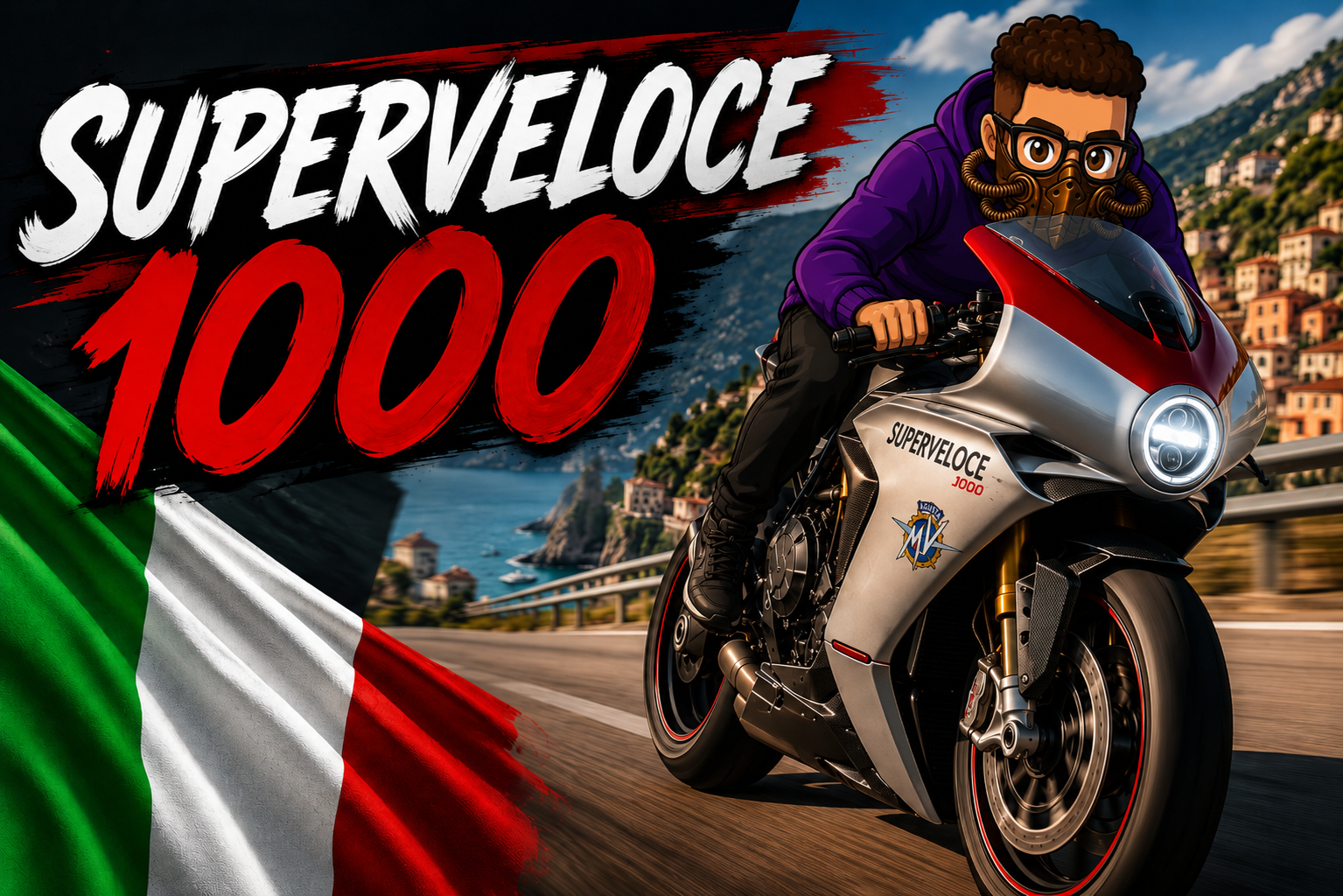
There are motorcycles you ride. And there are motorcycles you stop and look at. The MV Agusta Superveloce 1000 - launched in late 2023 as a 2024 model, with production running through 2026 - is firmly in the second category. It’s a 998 cc, 208 hp, 16-valve inline-four wearing a neo-retro café-racer body that nods directly to the 1970s MV race bikes Giacomo Agostini rode to championship after championship. Below are 10 facts to know about a bike that’s as much about Italian industrial history as it is about modern engineering.
TL;DR
- MV Agusta was founded in 1945 as a wartime aviation business that pivoted to motorcycles when Italy was banned from building aircraft after WWII.
- The Superveloce 1000 Serie Oro is a 500-unit limited edition (2024-2025 production) based on the 998 cc Brutale 1000 RR platform: 208 hp, 116.5 Nm, 0-100 km/h in 3.10 seconds.
- A second variant, the Superveloce 1000 Ago, was announced for Giacomo Agostini’s 83rd birthday and limited to just 83 numbered units, each signed by Agostini and carrying an 18-karat gold serial plate.
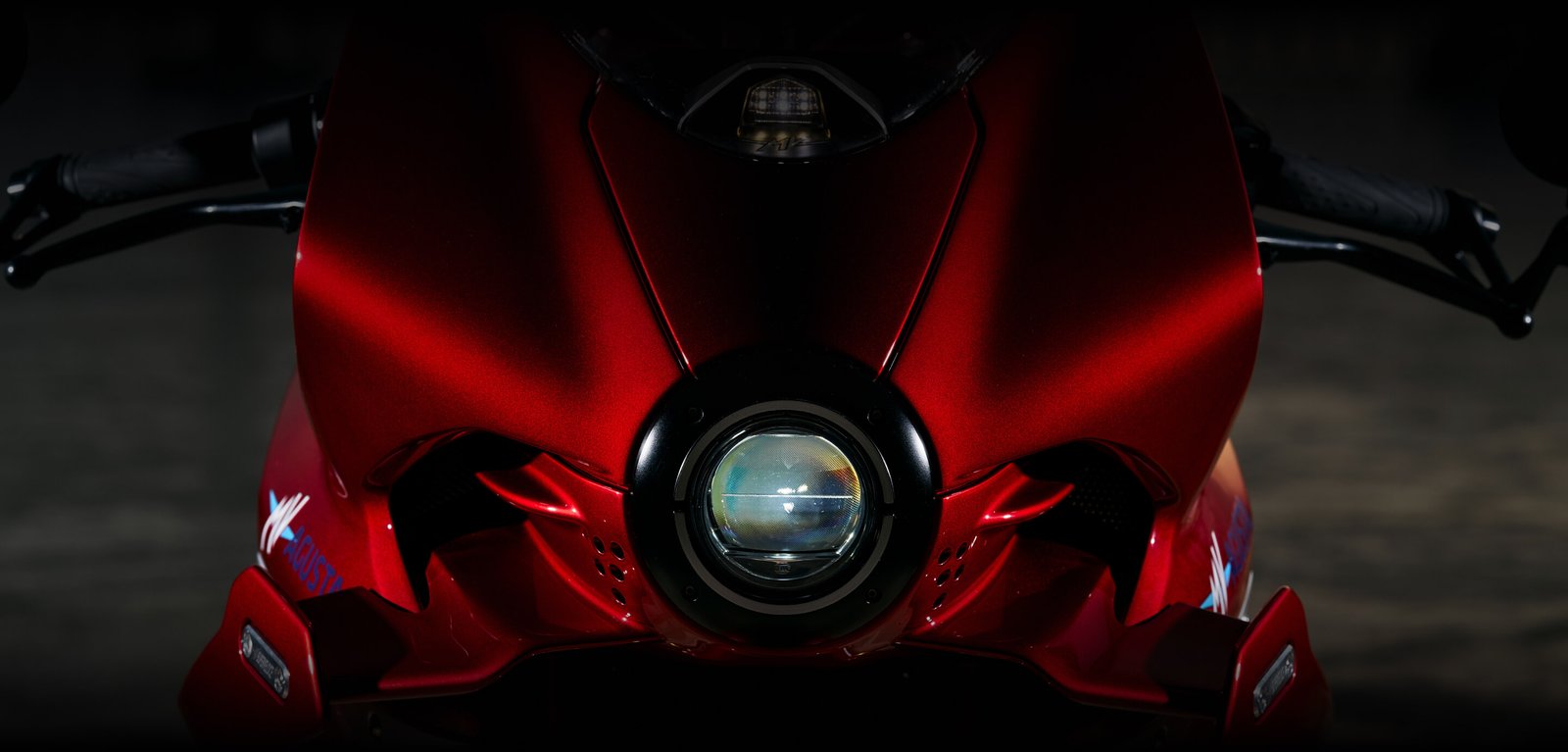
This isn’t a buying guide and it isn’t a comparison test. It’s a presentation. If you already love the bike, you’ll find the back-story below. If you don’t know it yet, you might after.
1. MV Agusta was born in 1945 because an aircraft factory wasn’t allowed to build aircraft anymore
After World War II, Italian aircraft production was banned by the post-war peace treaty. Count Domenico Agusta, who ran the family’s aircraft company near Milan, had spent the war years quietly planning a pivot. On 19 January 1945, MV Agusta was founded as a branch of the aviation business in Cascina Costa, Lombardy. The first prototype motorcycle, an MV 98 with a 98 cc two-stroke single, was shown to the press in October 1945. The same engineers who had built warplanes now turned to building motorcycles.
Source: Wikipedia - MV Agusta history
2. “MV” stands for Meccanica Verghera, the hamlet where the first bikes were built
Verghera is a small Lombardy village near the Agusta aircraft factory. “Meccanica” means “mechanics” in Italian. So the full brand name reads, literally, “Verghera Mechanics, Agusta family.” The bikes weren’t named for a designer or a place of headquarters; they were named for the workshop where they came together. Few motorcycle brand names carry that kind of geographic precision.
Source: MV Agusta official - brand history
3. The race team won 37 World Championship titles before MV Agusta stopped building bikes in 1977
From the late 1940s to the mid-1970s, MV Agusta dominated Grand Prix racing. The factory team won 37 rider World Championship titles and 270+ Grand Prix victories, with later counts including manufacturer titles bringing the total close to 75. The legends who rode them are a who’s-who of motorcycling: Giacomo Agostini (15-time World Champion), John Surtees (the only person to win World Championships on both two and four wheels), Mike Hailwood, Phil Read. The original company stopped building motorcycles in 1977. The Superveloce 1000 is a direct love letter to that era.
Source: Wikipedia - MV Agusta racing history
4. The Superveloce 1000 is a tribute to the 1999 F4 750 Serie Oro
When MV Agusta returned as a motorcycle manufacturer in the late 1990s, it relaunched with the F4 750 Serie Oro, styled by Massimo Tamburini (the same designer behind the Ducati 916). The Superveloce 1000 Serie Oro picks up the same visual vocabulary 25 years later: round single headlight, exposed steel trellis frame, single-sided swingarm, gold-coloured frame plates. It’s not a clone of the F4. It’s the F4 reinterpreted for an audience that wasn’t born when the original launched.
Source: webBikeWorld - MV Agusta Superveloce 1000 Serie Oro
5. The bike was designed at CRC, MV Agusta’s in-house Centro Ricerche
The Superveloce family was designed at CRC (Centro Ricerche Cagiva), MV Agusta’s R&D and design centre in San Marino. Adrian Morton, who’d led design since 2004 and penned the Superveloce 800 triple, left MV Agusta in June 2020. His successor, Stéphane Zache, joined CRC in September 2020 from Yamaha and Honda Japan and finalised the four-cylinder Superveloce 1000. The forged aluminium wheels are a CRC-exclusive design just for this bike.
Source: Motorcycle.com - Superveloce 1000 Serie Oro first ride
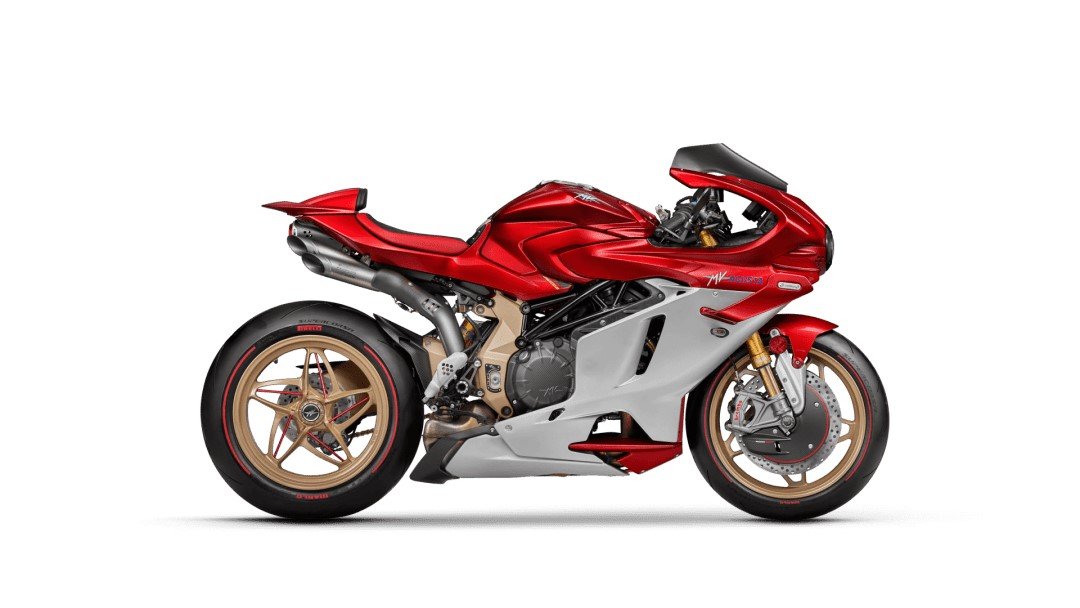
6. 998 cc inline-four, 208 hp at 13,000 rpm, 116.5 Nm at 11,000 rpm
The Superveloce 1000 borrows its engine from the Brutale 1000 RR: a 998 cc inline four-cylinder with 16 valves and an updated secondary balance shaft for smoother running. Peak power is 208 hp at 13,000 rpm; peak torque is 116.5 Nm at 11,000 rpm. Acceleration is properly fast: 0-100 km/h in 3.10 seconds, 0-200 km/h in 7.70 seconds. This is a hyper-naked engine wearing a café-racer dress.
Source: Goutchen - MV Agusta Superveloce 1000 technical sheet
7. Only 500 Serie Oro units will ever exist, across the entire 2024-2025 production run
Serie Oro means “Gold Series” in Italian, and it’s been MV Agusta’s halo-edition badge since the 1999 F4. Production of the Superveloce 1000 Serie Oro is capped at 500 numbered units across 2024 and 2025. Each one is hand-finished, each carries a numbered plaque, and the run will never be repeated. Dealer pricing varies by market, but expect €40,000 to €55,000 new for a Serie Oro. Used examples are already trading above sticker.
Source: autoevolution - Superveloce 1000 Serie Oro 2024
👉 The Superveloce 1000 sits 845 mm at the seat - taller than most café racers in its class. Try the Superveloce 1000 on the Goutchen seat-height simulator to see if you can flat-foot it before falling further in love.
8. 41 carbon fiber components, including aviation-inspired winglets
The Serie Oro is wrapped in 41 carbon fiber pieces : bodywork, dash housing, seat hump, even the front mudguard. Among them, a pair of fairing winglets nod directly to MV Agusta’s aircraft heritage and add genuine high-speed downforce. The forged aluminium wheels, exclusive to the Serie Oro, save unsprung weight you can feel. It’s an exercise in using racing materials decoratively without making the bike look like a track-day toy.
Source: Motorcycle.com - Superveloce 1000 Serie Oro features
9. Suspension is fully electronic by Öhlins; rider aids are full-house
The fork is Öhlins NIX EC USD with electronic damping control. The rear shock is the matching Öhlins TTX EC. The chassis is a steel tubular trellis with aluminium side plates and an adjustable single-sided swingarm. Riding aids include cornering ABS, eight-level traction control, wheelie control, launch control, four ride modes (Sport / Race / Rain / Custom) and a quickshifter with auto-blipper. For a bike that looks this analog, the electronics are deeply modern.
Source: Cycle World - Superveloce 1000 Serie Oro Buyer’s Guide
10. The Ago edition: 83 numbered units, signed by Giacomo Agostini, 18K gold plate
In 2025, MV Agusta announced a second limited variant: the Superveloce 1000 Ago, celebrating Giacomo Agostini’s 83rd birthday. Production is capped at 83 numbered units. Each one is signed personally by Agostini and carries an 18-karat gold numbered plate on the steering head. The ignition key sits in a machined aluminium shell that incorporates a brass coin from a trophy Agostini donated from his personal collection. It’s part motorcycle, part wearable history.
Source: Cycle World - MV Agusta Superveloce 1000 Ago first look
So what is the Superveloce 1000?
It’s a motorcycle that exists because someone at MV Agusta still wants to make objects that are beautiful first and fast second, and then makes them fast anyway. The brand history threads through every panel : the aviation winglets, the gold plaques that recall the 1999 F4, the single-sided swingarm that’s been an MV signature since the 750 racing era. The 208 hp engine is the kind of statement an Italian factory makes when it’s not interested in price-class positioning.
You probably won’t buy one. Hardly anyone will - 500 Serie Oro and 83 Ago units mean fewer Superveloces produced than first-year Ferrari Daytona SP3s. But that’s exactly the point. The Superveloce 1000 is a bike to know, even if you only ever know it from photos.
Useful Goutchen links: