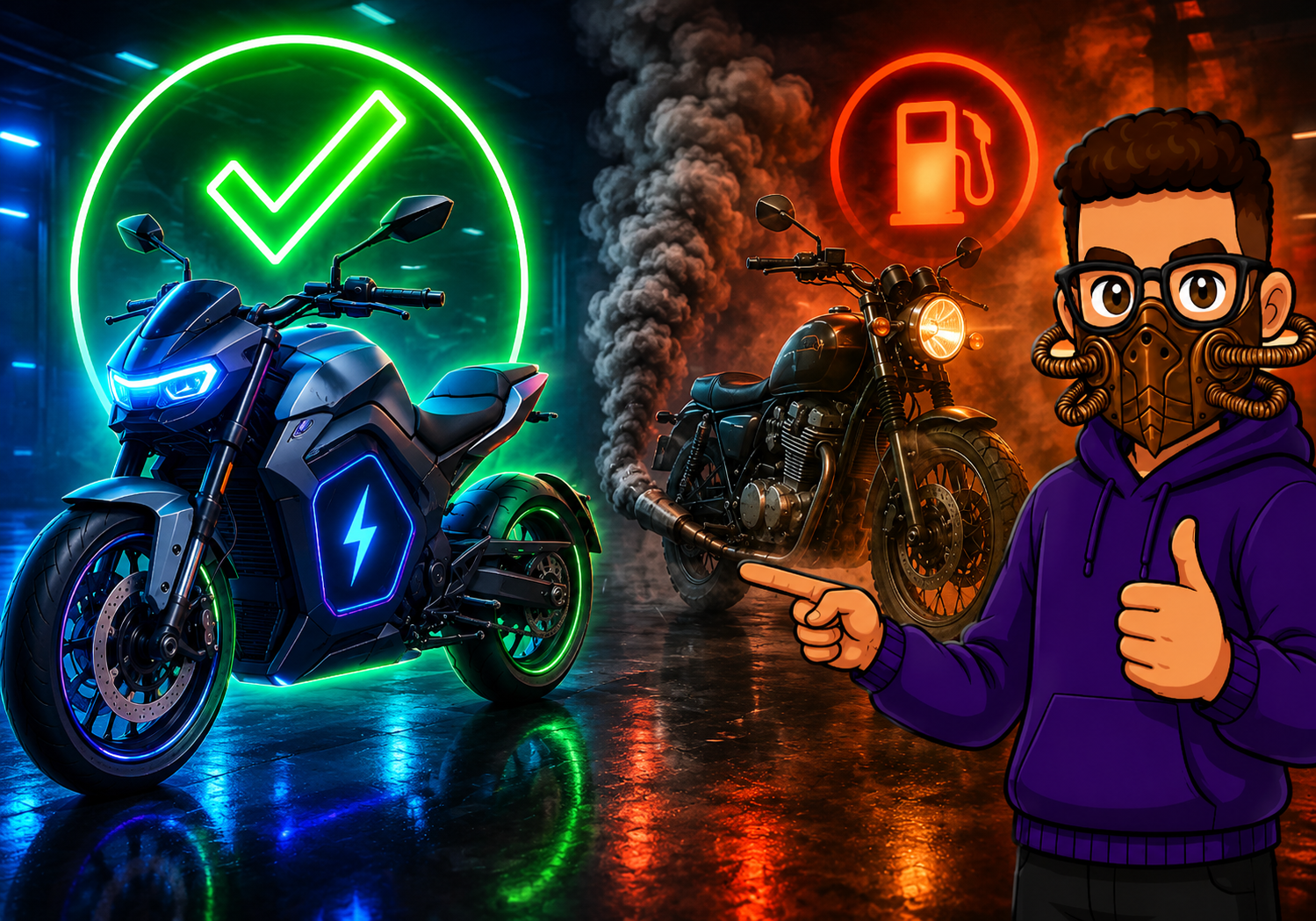

10 Reasons an Electric Motorcycle Beats a Gas-Powered One
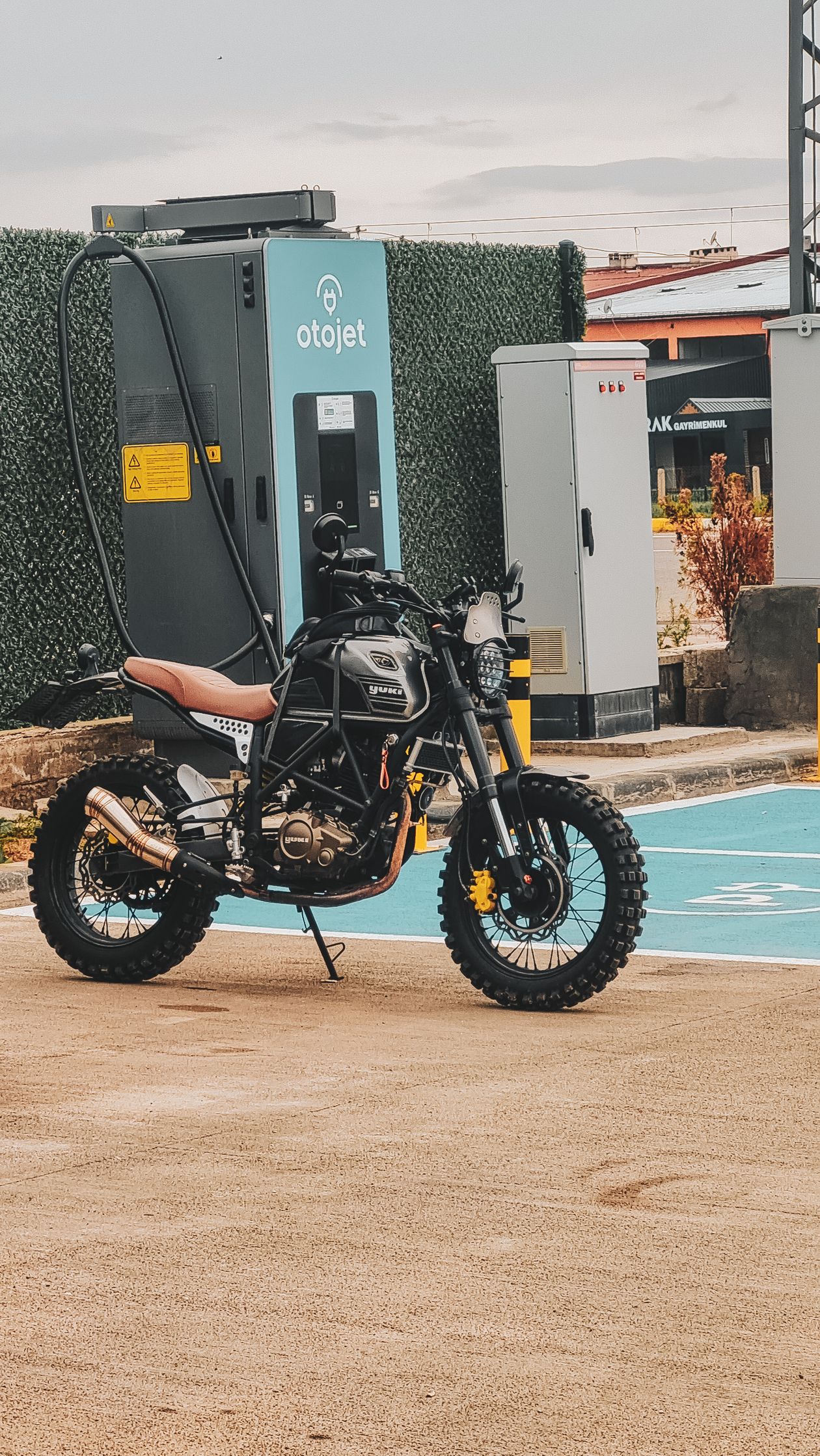
Photo: Mahmut Yilmaz / Pexels
Electric motorcycles are no longer the experimental category they were a decade ago. Zero, LiveWire, Energica, Cake, Evoke, the new Honda WN7, and a growing wave of Chinese-built models have made electric two-wheelers a real alternative to gasoline for daily riding in 2026. The case for switching has gotten stronger every year. Here are 10 practical reasons an electric motorcycle beats a gas-powered one for the kind of riding most people actually do, plus an honest acknowledgment at the end of where electric still falls short.
TL;DR
- Running costs and maintenance are dramatically lower - no oil, no gears, no clutch, electricity per km is roughly one-third to one-fifth the cost of gasoline.
- Performance feels different in a good way - instant torque from zero RPM, silent operation, smartphone integration, over-the-air software updates that improve your bike after purchase.
- City regulation is increasingly on electric’s side - London Congestion Charge exemption, Paris ZFE Crit’Air 0 status, free public charging, free street parking, purchase incentives, and that trend is only accelerating.
This is a practical comparison piece, not a manifesto. Below are the 10 advantages where the data is real. The last section addresses the trade-offs honestly.
1. Running costs are roughly one-third to one-fifth of a gas bike
The single biggest practical advantage of an electric motorcycle is what it costs to run. Electricity per mile in the US and Europe averages $0.02-$0.04 when home-charging, versus $0.07-$0.10 per mile on a comparable mid-displacement gas bike. Translated to a full year of 10,000 km commuting, that’s roughly $70-$200 of electricity versus $1,600-$2,400 of gasoline. Over five years of ownership, the running-cost gap alone is several thousand dollars, genuine purchase-price-narrowing money.
Source: Bike-EV - Electric vs gas motorcycle cost comparison 2026
2. Instant torque from zero RPM
Electric motors deliver maximum torque from zero revs. That changes how a motorcycle accelerates : no clutch slip, no waiting for the engine to come on cam, no downshift before a pass. The Zero SR/F makes 140 lb-ft (190 Nm) and hits 0-60 mph in 3.65 seconds. The Harley-Davidson LiveWire One does 0-60 in 3.0 seconds despite “only” 105 hp, all because of torque on demand. The Energica Ego raises that to 215 Nm of torque from a 145 hp motor. The riding feel is genuinely different, and once you’ve experienced it, the rev-shift-clutch dance of a gas bike feels like extra steps.
Source: RevZilla - LiveWire vs Zero SR/S comparison
3. No gears, no clutch
Most modern electric motorcycles are single-speed direct-drive : twist and go. No clutch lever, no gear lever, no engine-braking management. For new riders, that removes one of the steepest parts of the motorcycling learning curve. For experienced riders, it removes one of the most fatiguing parts of stop-and-go city traffic, constant clutch work in slow-moving congestion gets old fast. Some electrics (LiveWire One, Energica) offer modes that simulate gas-engine deceleration ; most riders end up turning the gas-bike imitation off after a week.
Source: Cycle World - 2025 Zero SR/F Buyer’s Guide
4. Near-silent operation
An electric motorcycle is quiet. Not exhaust-baffle quiet, genuinely close to silent at low speed, with only tire noise and a soft electric whirr at higher rpm. For the rider, that means you can hear ambient traffic clearly, hear the music in your helmet at any volume, and arrive at any destination without announcing yourself. For neighbours : you can roll out at 5am for a sunrise ride or back into your driveway at midnight without waking anyone. Noise-complaint cities (London, Paris, Vienna) have started enforcing decibel limits on gas bikes, electrics sidestep that entirely.
Source: Electrek - Electric motorcycle showdown
5. Drastically lower maintenance
No oil changes. No oil filter. No spark plugs. No valve adjustments. No carburettor or fuel-injector cleaning. No exhaust pipe to corrode. The drivetrain has perhaps a tenth of the moving parts of an internal-combustion drivetrain. Brake pads last roughly 2-3 times as long because of regenerative braking. The big maintenance items left on an electric motorcycle : tyres, brake fluid every two years, chain or belt lubrication, and one annual check of the suspension. That’s it. The total cost-of-maintenance gap over five years is consistently the second-biggest cost advantage after fuel.
Source: Bike-EV - Electric vs gas cost comparison
6. Zero local emissions
No tailpipe means no NOx, no particulates, no CO2 emitted where you ride. For city riders, the local air-quality benefit is real, especially in dense traffic where gas-motorcycle emissions are concentrated at street level. An electric motorcycle commuting an hour a day for five years displaces hundreds of kilograms of CO2 equivalent compared to a gas bike, even after accounting for lifecycle manufacturing emissions. Total lifecycle figures depend on how clean your local electricity grid is, cleaner grids mean larger advantages, but at the point of use, an electric is genuinely a zero-emission vehicle.
Source: International Energy Agency - Global EV Outlook
7. Regenerative braking
Press the brakes (or roll off the throttle on most electrics) and the motor reverses, slowing the bike and feeding electricity back into the battery. The result : extended range when you ride in city traffic, and brake pads that last far longer than on a gas bike. Some electrics let you tune regen aggression from “gas-bike coasting” to “aggressive one-pedal-style stopping,” and many city riders end up almost never touching the front brake lever in light traffic, managing the bike entirely on the throttle.
Source: Zero Motorcycles - SR/F technical specifications
8. Smart connectivity and over-the-air updates
Most modern electric motorcycles ship with a companion app and a connected dashboard. Zero, LiveWire, Energica, and most Chinese brands now offer GPS tracking, anti-theft alerts, battery state-of-charge data, ride statistics, and remote diagnostics through your phone. More importantly, many can receive over-the-air firmware updates, new ride modes, calibration improvements, battery-management tweaks, after the bike leaves the factory. Your bike literally gets better while it’s parked. Gas bikes don’t do this in any meaningful way ; an ECU flash at a dealership is the closest equivalent and it costs €200-500.
Source: LiveWire - Connected platform
9. Access to low-emission zones and city-charge exemptions
European urban regulation is moving steadily toward favouring zero-emission vehicles. London’s ULEZ treats motorcycles registered since July 2007 as compliant, so the real EV advantage is the separate Congestion Charge in central London - £15 per day - which has historically exempted electric vehicles and which many cities’ equivalent schemes still do. Paris’s ZFE Crit’Air classification puts battery electrics in Crit’Air 0, the most permissive category, with unrestricted access as the zone tightens. Milan’s Area C and Brussels’ LEZ follow similar logic. As low-emission zones expand every five years, electric two-wheelers stay welcome by default while older gas bikes face progressively more restrictions.
Sources: Transport for London - Congestion Charge · Paris ZFE - Crit’Air explanation
10. Tax incentives, lower registration, and free parking
Many European markets and US states offer direct purchase incentives for electric motorcycles. France has its bonus écologique (currently around €900 for an electric two-wheeler). Italy’s Ecobonus has paid up to €3,000 on electric bikes. Germany runs multiple Länder-level programmes. The UK has the Plug-in Motorcycle Grant for sub-£10k bikes. Many cities offer free public-charging electricity for two-wheelers and free street parking for electric bikes. Registration fees are often reduced or waived. After incentives, the price gap between an electric and a comparable gas bike has effectively closed in several markets - and the running-cost savings start working from day one.
Source: ACEM - European motorcycle industry association
So is electric the right choice for every rider?
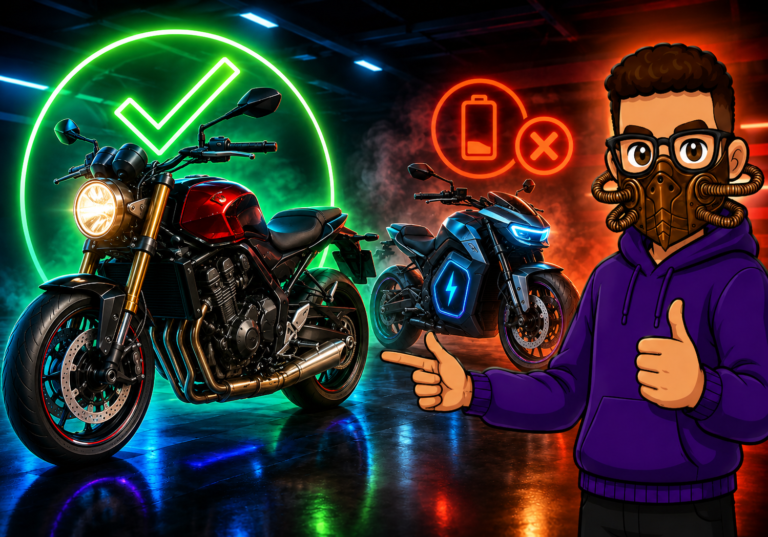
Not yet. There are honest trade-offs that the 10 advantages above don’t erase.
Range is still shorter than a gas tank. Most electric motorcycles deliver 150-300 km of real-world range per charge, while a comparable gas tank gives 300-500 km and refills in three minutes. Fast-charging is improving, modern DC fast-charge stations can take a Zero or LiveWire from 20% to 80% in roughly 30-40 minutes, but home-charging on a wall socket still takes 4-10 hours, and long-distance touring still requires real planning. Upfront cost is higher, though incentives close most of the gap, and the fuel and maintenance savings recover it within 3-5 years for most riders. The service network is thinner outside major urban centres, especially for smaller brands.
The honest takeaway : the 10 advantages above are real and getting more compelling every year. For city riders, commuters, urban delivery riders, and anyone who rides under 200 km in a typical day, an electric motorcycle is genuinely the better choice in 2026. For long-distance touring riders who need 500 km between stops and refuel-then-keep-going convenience, gas still wins, but probably not for much longer, and the gap is closing faster on every model cycle.