
10 Italian Motorcycle Brands You Should Know

Photo: Ducati / Wikimedia Commons (CC0)
Italy occupies a peculiar position in the global motorcycle industry. The country is smaller than California in land area, has a population about the same as the UK, and yet has produced an outsized share of the world's most distinctive motorcycle brands. The comparison most often used is Switzerland and watches: a small country whose entire industrial identity got organized around making one category of object very well.
The reason is partly geographic. Emilia-Romagna, the region that contains Bologna, Modena, and a handful of smaller towns, is known locally as the Motor Valley. The same stretch of countryside hosts Ferrari, Lamborghini, Maserati, Pagani, and Dallara on the four-wheel side, plus Ducati and the original Moto Morini engineering on two wheels. The supplier networks built for the car industry - forging, machining, carbon-fibre, gearbox specialists - made it cheap to start a small motorcycle company. Several of the names below were founded exactly that way.
The selection that follows is ordered roughly by global recognition and deliberately varied across price points and disciplines. Four are mass-volume sport-and-touring (Ducati, Aprilia, MV Agusta, Moto Guzzi). One is the world's most exclusive boutique chassis-maker (Bimota). One is Italy's electric pioneer (Energica). Two are off-road specialists (Beta, Fantic). And two are heritage names revived for modern markets (Benelli, Moto Morini).
TL;DR
- Italy has the most disproportionately large motorcycle culture of any country - ten globally-known brands from a population smaller than the UK or France.
- The big four sport-and-touring names are Ducati, Aprilia, MV Agusta, and Moto Guzzi - each with completely different engineering philosophies and personalities.
- Beyond the famous names, Italy also produces the world's most exclusive boutique frames (Bimota), Europe's only major MotoE-pedigreed electric brand (Energica), and the dominant force in off-road specialist segments (Beta).
1. Ducati - the icon that defines Italian sport-biking
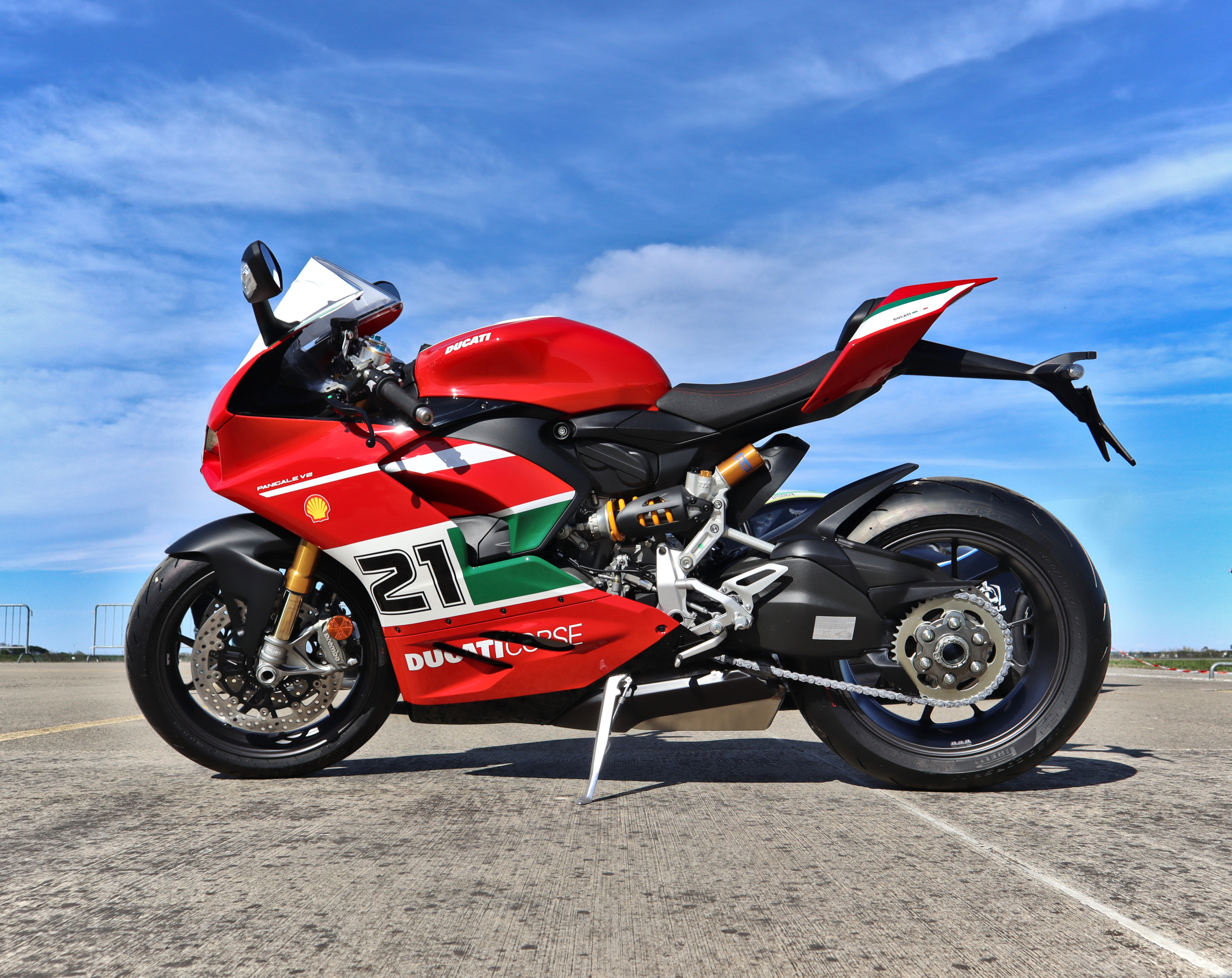
Photo: Terragio67 / Wikimedia Commons (CC-BY-SA 4.0)
Founded in 1926 in Bologna, Ducati started as an electrical-components maker - the original product was vacuum-tube radio condensers, not motorcycles. The pivot to two wheels came after World War II, and by the late 1950s the company had committed to the engineering signature it still carries today: desmodromic valve actuation, the mechanism that opens AND closes valves with cams instead of relying on springs to close them. The Panigale V4 superbike, the Streetfighter V4 hyper-naked, the Multistrada V4 adventure, the Monster, the Hypermotard V2 (relaunched at EICMA 2025), and the Scrambler range all share that DNA. Ducati has been part of the Audi / Volkswagen Group since 2012, but every bike is still designed and assembled at the Borgo Panigale factory in Bologna. For most riders outside Italy, "Italian sport motorcycle" and "Ducati" mean roughly the same thing.
Sources: Ducati - Heritage; Wikipedia - Ducati.
2. Aprilia - racing royalty on the current MotoGP grid

Photo: Calreyn88 / Wikimedia Commons (CC0)
Aprilia was founded in 1945 in Noale, a small town in the Veneto region near Venice, as a bicycle workshop. The transition to motorcycles came in the 1960s, but the brand became globally famous through racing. Aprilia has won 38 Grand Prix world championships across the 125cc, 250cc, and Superbike classes, and is one of only two Italian manufacturers currently competing as a full MotoGP factory (the RS-GP) alongside Ducati. The current road-bike lineup mirrors that racing pedigree: the RSV4 V4 superbike, the Tuono V4 hyper-naked built on the same platform, and the parallel-twin RS 660 and Tuareg 660 that miniaturised the V4 engineering for a more accessible price point. Aprilia has been part of Piaggio Group since 2004, alongside Moto Guzzi and Vespa.
Sources: Aprilia - World; Wikipedia - Aprilia.
3. MV Agusta - sculpture you can ride

Photo: Cjp24 / Wikimedia Commons (CC-BY-SA 4.0)
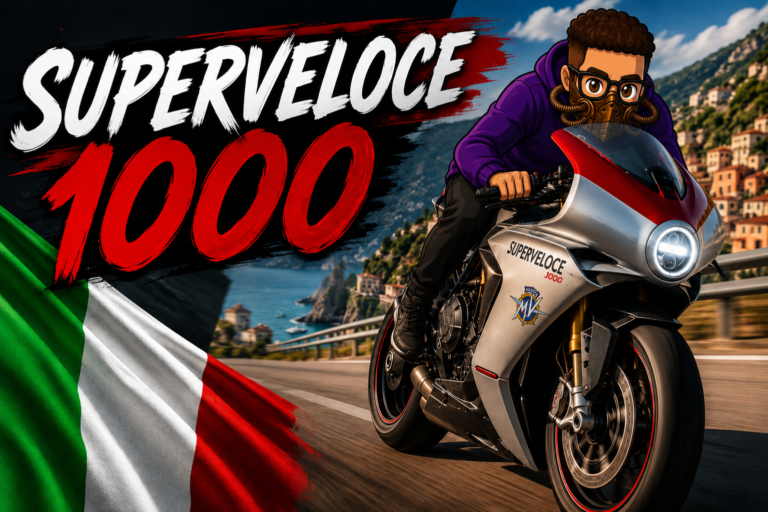
MV Agusta was founded in 1945 in Cascina Costa di Samarate, just outside Varese near Milan, as the motorcycle division of the Agusta helicopter and aerospace company. It is the most decorated brand in motorcycle racing history with 75 World Championships and 270 Grand Prix victories. The dominant force of the 1950s, 60s, and early 70s - Giacomo Agostini's eight 500cc world titles form the spine of that record. The company has changed ownership several times since road-bike production restarted in 1997, but the current lineup retains the visual signature MV is famous for: small-displacement (often 800cc) short-stroke triples that produce more horsepower than they should and look more like industrial-design exercises than transportation. The Brutale, F3, Dragster, and Superveloce are the current core. Pierer Mobility (the KTM parent group) acquired a controlling stake in 2022.
Sources: MV Agusta - Heritage; Wikipedia - MV Agusta.
4. Moto Guzzi - 105 years of unbroken production

Photo: AVMOTO / Wikimedia Commons (CC-BY-SA 4.0)
Moto Guzzi was founded in 1921 in Mandello del Lario on the eastern shore of Lake Como, and has produced motorcycles in the same factory ever since - making it the oldest European motorcycle brand in continuous production. The signature is engineering rather than styling: every Moto Guzzi since 1967 has used a transverse 90-degree V-twin, mounted with the crankshaft running fore-and-aft and the cylinder heads sticking out into the airstream for natural air cooling. The current range covers the V7 retro standard, the V9 Bobber cruiser, the V85 TT adventure, and the V100 Mandello sport-tourer, which became the first production motorcycle with active aerodynamics - electrically-operated wings on the side fairings that deploy at speed. Like Aprilia, Moto Guzzi belongs to Piaggio Group.
Sources: Moto Guzzi - World; Wikipedia - Moto Guzzi.
5. Bimota - the world's most exclusive series-production motorcycles

Photo: m.caimary / Wikimedia Commons (CC-BY 2.0)
Bimota was founded in 1973 in Rimini on Italy's Adriatic coast by three engineers - Bianchi, Morri, and Tamburini (the name is the first two letters of each surname). The original business model is what still defines the brand fifty years later: buy a Japanese engine, build everything else by hand. The argument has always been that Japanese engines were better than Japanese frames, so an Italian chassis built around a Honda, Yamaha, or Suzuki motor was the best of both worlds. Bimota is most famous for the Tesi series, which abandoned conventional telescopic forks for hub-center steering - the front wheel turns on a hub-mounted pivot with suspension and steering mechanically decoupled. Kawasaki bought a controlling stake in 2019, and Bimota now builds the KB4, Tera, and Tesi H2 on Kawasaki four-cylinder platforms. Annual production is measured in the hundreds, not thousands.
Sources: Bimota - Storia; Wikipedia - Bimota.
6. Benelli - Italy's oldest motorcycle brand

Photo: AVMOTO / Wikimedia Commons (CC-BY-SA 4.0)
Benelli was founded in 1911 in Pesaro on the Adriatic coast by Teresa Boni Benelli, a widow with six sons - which makes it not only Italy's oldest surviving motorcycle brand but one of the oldest motorcycle marques anywhere. The original business was a general repair shop; the brothers moved into motorcycle production in 1921. The company was bought by Qianjiang Motor of China in 2005, but design, engineering, and brand management remain Italian-led from the original Pesaro headquarters. The current lineup is built around accessible mid-displacement bikes that combine Italian styling with Chinese-scale pricing: the TRK 502 adventure (one of the best-selling adventure bikes in Europe), the Leoncino retro naked, the 752S parallel-twin naked, and the Imperiale 400 single-cylinder classic.
Sources: Benelli - Our History; Wikipedia - Benelli.
7. Energica - Italy's electric pioneer

Photo: Jan Ainali / Wikimedia Commons (CC-BY-SA 4.0)
Energica was founded in 2014 in Modena, in the heart of Motor Valley, as a spin-off from CRP Group - a Modena-based supplier of motorsport CNC machining and 3D-printed parts that had spent decades in the Formula 1 supply chain. From 2019 to 2022 Energica was the sole official supplier of MotoE racing motorcycles, the electric class of the MotoGP support series. That contract gave the brand its racing pedigree and forced rapid development of high-output electric powertrains. The road range covers the Ego+ RS superbike (240 km/h top speed), the Experia sport-tourer (claimed urban range over 420 km - the longest of any production electric motorcycle), and the Eva Ribelle naked. The only Italian manufacturer building electric motorcycles at production scale.
Sources: Energica - About Us; Wikipedia - Energica Motor Company.
8. Beta - the quiet dominator of off-road specialist segments

Photo: Jix31 / Wikimedia Commons (CC-BY 4.0)
Beta was founded in 1904 (three years older than Benelli as a company, although motorcycle production started later) in the Florence area, and is now headquartered in Rignano sull'Arno just outside Florence. Beta is the dominant force in two niches that the big brands largely ignore: trials competition - where the rider rolls over obstacles at near-walking speed without putting a foot down - and serious enduro. The Evo trials range and the RR enduro range have won multiple World Trials and World Enduro championships across the 2010s and 2020s. The X-Trainer is a road-legal dual-purpose bike for the entry-level off-road segment. Outside the trials and enduro paddocks Beta is little-known; inside those communities it sells more bikes than any other brand on the planet.
Sources: Beta Motor - The Company; Wikipedia - Betamotor.
9. Fantic - the heritage off-road brand reinventing itself
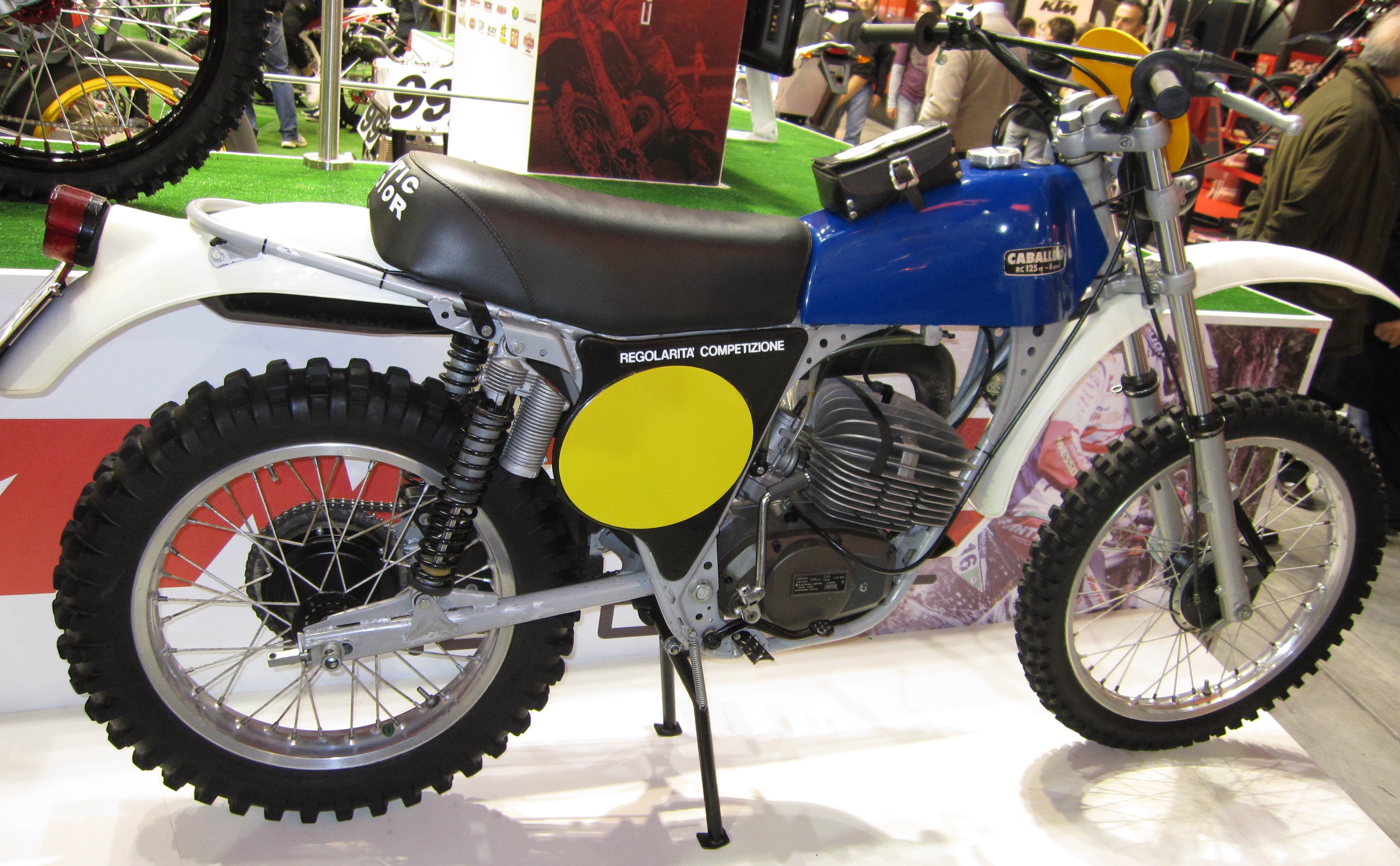
Photo: Desmodromico / Wikimedia Commons (CC-BY-SA 3.0)
Fantic was founded in 1968 in Treviso (Veneto) and became famous in the 1970s and 80s for the Caballero - a sequence of small-displacement air-cooled two-stroke off-road bikes that were the entry-level dirt bike for an entire generation of Italian and European riders. The brand went through ownership changes and a long quiet period, then was revived by VeNet Holding in 2014. The modern lineup is built on the heritage: the new Caballero is a 125-500cc Scrambler / Flat Track / Rally family in clear visual homage to the 1970s originals, alongside Enduro and Motard 125-500cc lines and an electric trials range. Fantic is the closest modern equivalent to a heritage off-road brand reinventing itself for new riders.
Sources: Fantic Motor - Heritage; Wikipedia - Fantic Motor.
10. Moto Morini - a heritage brand finding a new audience

Photo: MotorideSA / Wikimedia Commons (CC-BY-SA 4.0)
Moto Morini was founded in 1937 in Bologna by Alfonso Morini, a former motorcycle racer who had previously built bikes under the MM marque. The 1970s 3½ V-twin - a 350cc 72-degree V-twin sportbike with the engine designed by Franco Lambertini - is the brand's most-cited historical product, and the legendary handling of that machine is still flagged by historians as a high point of Italian motorcycle design. The original company went through bankruptcy several times. The current Moto Morini was revived under Chinese ownership (Zhongneng Group) and now produces the X-Cape 650 / 700 adventure series and the Seiemmezzo (Italian for "6½") - a 650cc naked and scrambler aimed at the same accessible-mid-displacement market where Benelli operates. Design office in Trivolzio, Lombardy; production in China.
Sources: Moto Morini - The Brand; Wikipedia - Moto Morini.
Step back and look at the pattern. Ten brands founded across nine decades, scattered across most of northern Italy with a particular concentration in Emilia-Romagna's Motor Valley. Bologna alone hosts Ducati and the original Moto Morini engineering, and (across the four-wheel side of the supplier network) Ferrari, Lamborghini, Pagani, Maserati, and Dallara. That is a regional industrial cluster that exists nowhere else on this scale in motorcycling. The country's willingness to keep low-volume engineering economically viable produces oddities like Bimota, which assembles fewer motorcycles in a year than Honda produces in a single morning shift but stays in business because its customers will pay 40,000 EUR for a hand-built chassis. And the absence of a hard line between "style" and "engineering" in Italian design culture is what gives MV Agusta the freedom to spend money on visual proportion that a Japanese product manager would have crossed off the budget on day one.
A few deeper-cut brands didn't make the main ten but are worth knowing if you want to dig further. Cagiva (Varese, 1950, the Eddie Lawson 500GP era - now mostly dormant). Gilera (1909, the oldest surviving Italian marque on paper, today building scooters and small bikes under Piaggio). Vyrus (Rimini, hub-centre-steering specialists who build even rarer machines than Bimota). And SWM (revived in 2014 after a long pause, building accessible adventure and dual-sport bikes from a small factory near Milan).
Useful Goutchen links
- Bimota: Do You Know This Rare Italian Motorcycle Brand? - the boutique-brand deep-dive that pairs with section 5 above.
Which Italian brand would you most want to own, and which of the lesser-known names (Cagiva, Gilera, Vyrus, SWM) would you most like to see covered next? Drop a comment below.